World-leading scanner is a gamechanger for patients and research
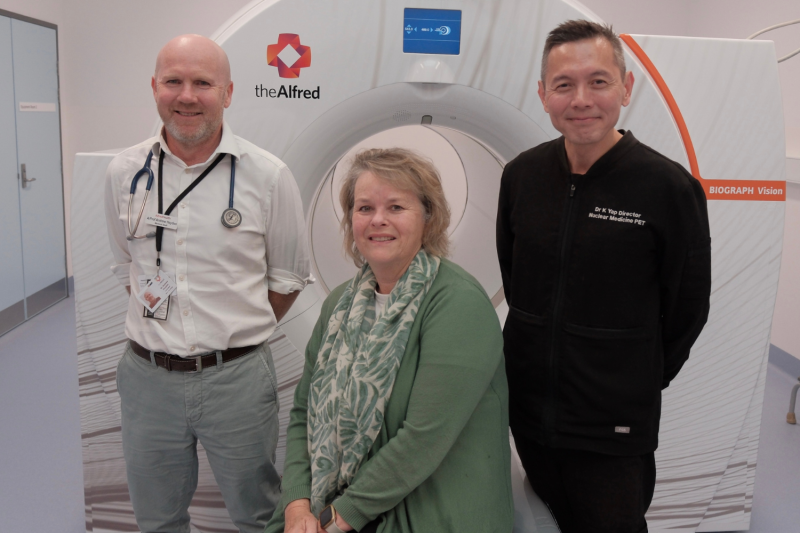
Meet Karen, one of the first patients to be scanned using our new world-class advanced total body Quadra PET scanner.
For the Melbourne-based mother of two, having a dual diagnosis of multiple sclerosis and metastatic melanoma means she has to undergo lengthy MRI and PET scans every three months.
"I'm in a rare-ish category of people, where doctors need to regularly track whether there's any progression of both my MS and my cancer," Karen said.
The arrival of the Quadra - one of the most advanced scanners of its kind in the world - means that those scans have now been cut from over 35 minutes each to under 10 minutes. But the time saving isn't the only benefit.
"Beyond it being a much quicker and quieter scan, there's a lot of comfort in knowing the technology is so much more precise," Karen said.
"I feel very fortunate having access to this kind of cutting edge scanning, where we know the doctors are able to get more detailed information, particularly when there is so much that's unknown for me."
Victorian public patients will from this month have access to the scanner, which operates at a lower radiation dose than previous PET/CT scanners.
“Having this technology on site means we can see more patients in a more timely fashion, ultimately allowing patients to get the care they need quicker," said Karen's oncologist at The Alfred, A/Prof Andrew Haydon.
"It also allows us to track the body's response in near-real time, which means we can see what's working and what's not - and even potential side effects - sooner than ever before, resulting in better outcomes."
For Director of Nuclear Medicine and PET at The Alfred, A/Prof Ken Yap, the ability to give valuable time back to patients is one of the more significant benefits of the Quadra.
"We don't want patients to spend any longer here at the hospital than they need to," A/Prof Yap said.
"For someone with a cancer diagnosis, there's enough time spent at appointments and the associated waiting and travel. The fact we can now cut that down, while also increasing safety and comfort, is a positive."
The scanner allows clinicians and researchers to continue lifting the bar in cancer diagnosis and treatment.
"This incredible technology will further enable us to match therapies to individual tumour biology, which is our work in theranostics, and continue to break new ground in terms of clinical trials," A/Prof Yap said.
The Quadra PET scanner was made possible through a $24 million investment, jointly funded by the Federal Government ($12 million), Victorian Government ($7 million), and philanthropic support through The Alfred Foundation ($5 million).