A global exchange in life-saving care
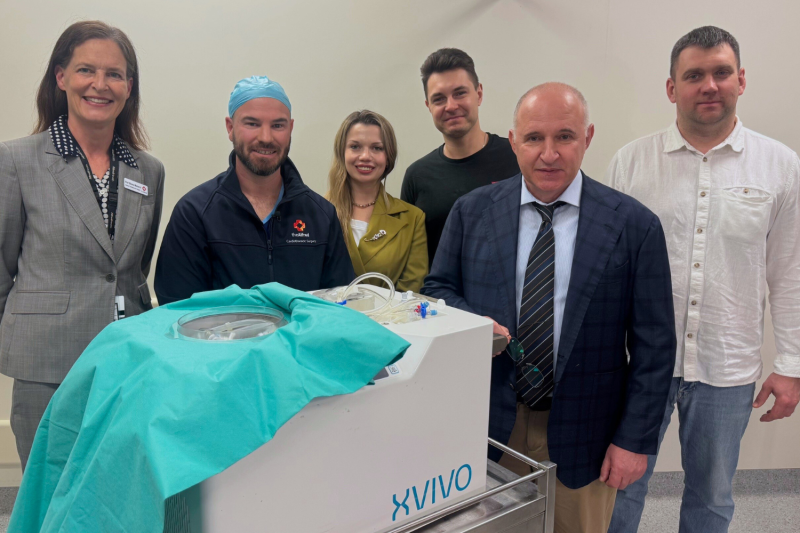
The Alfred recently welcomed Ukraine’s leading heart transplant team, with clinicians using the opportunity to share experiences, surgical techniques and demonstrate new technology driving transplant medicine forward globally.
The group spent time with clinicians from a range of Alfred specialities, including heart and lung, surgery and trauma, and observed clinical practice, including a demonstration of the technology used to extend the time a donor heart can be kept safely outside the body, called hypothermic machine perfusion (pictured).
Despite the different circumstances in Australia and Ukraine, the week was mutually beneficial, said Prof Silvana Morasco, Director of Cardiothoracic Surgery at The Alfred.
“I was wondering what they could possibly learn from us, given the immense complexity of the conditions they work in every day,” Prof Marasco said.
“But while we can share ‘surgical secrets’ and show some of the critical care and transplant developments that have become best practice here, it’s the sense of care and unwavering commitment to patients that actually sustains and connects us both.”
The Ukrainian team last year completed a record 63 heart transplants, despite prolonged blackouts, air raids and attacks on civilian infrastructure, which has led Prof Borys Todurov, Director of the Heart Institute of the Ukrainian Ministry of Health in Kyiv to continue to seek out ways to adapt and develop Ukraine’s transplant program during wartime.
“The nature of our work has completely changed over the last four years,” Prof Todurov said.
“We are constantly trying to find ways we can develop our program as we respond to changing conditions, such as travelling by road in difficult conditions to obtain donor hearts, caring for patients with very specific wartime-injuries, relying on our generators to keep our power functioning, and working with patients and team members who are themselves experiencing a lot of trauma and stress.”
The Ukrainian team will now head to Sydney to continue their observership, before returning to work at the Heart Institute in Kyiv.