What Treaty means for health
Equity and access to healthcare was on the agenda at this year’s NAIDOC Week celebrations, as part of milestone celebrations marking of 50 Years of Deadly.
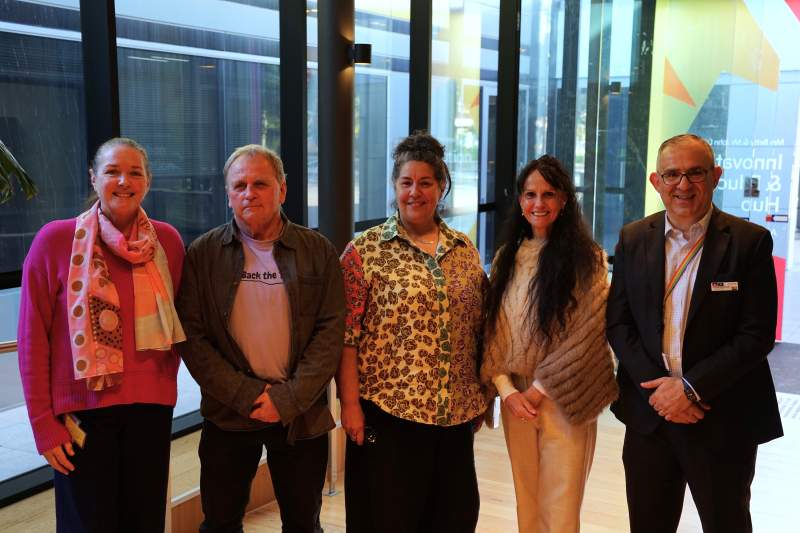
Staff at Bayside Health were invited to attend Understanding Victoria's Treaty, a panel discussion on the establishment of Gellung Warl and its ability to improve health outcomes for Victorian First Nations People going forward.
First People's Assembly of Victoria Member and special panel guest Uncle Alan Brown described Victoria's Treaty as "a gamechanger".
Gellung Warl, from Gunaikurnai language that translates to ‘Tip of the Spear', is a newly formed entity evolved from Victoria's First Peoples' Assembly.
Gellung Warl has powers to:
- Inform Parliament and the Victorian Government and make decisions that impact First Peoples
- Establish an independent accountability mechanism and improve outcomes for First Nations People under the National Agreement on Closing the Gap
- Establish a truth-telling in local communities about First Nations history, supporting ongoing education, healing and reconciliation
All of which, Uncle Alan Brown said, will help bring about improved health outcomes for Aboriginal and Torres Strait Islander Peoples in Victoria.
"If Victoria is in pain, then treaty is a positive solution that brings everybody along," Uncle Alan said.
"And it won't be just emergency services that will improve overall, it could be mental health delivery and all the other ancillary services that Bayside Health offers."
Chief Medical Officer and Executive Director Clinical Governance for Bayside Health Dr Tony Kambourakis agreed.
"Treaty is about recognising Aboriginal self-determination and strengthening genuine partnerships to improve health outcomes," Dr Kambourakis said.
"Our hospitals are at the cutting edge and continually advancing healthcare. But unless care is culturally safe, accessible and respectful, those advances will not benefit everyone equally.
"The Treaty process invites us to work differently — to partner with Aboriginal communities, listen to their priorities and design services together—so that every person can achieve the best possible health outcomes."
Interim Chief of Nursing and Midwifery Officer at Bayside Health Adj Prof Fiona Reed said the framework will support Bayside Health to implement positive change.
"As Treaty progresses, our workforce priorities will need to move beyond employment targets to ensuring we're creating a culturally inviting, equitable and sustainable workforce," Adj Prof Reed said.
"Eventually we hope to have Aboriginal and Torres Strait Islander representation across all levels of the organisation from clinical, management and executive levels."
Bayside Health Alfred Senior Aboriginal Advisor Alison Cragie-Parsons acknowledged that it would take ongoing conversations to help people understand the purpose and benefits of the Victorian Treaty in the health sector.
"What I've said to people who are not yet on board with the Treaty is that this is not just about what Aboriginal people would gain, it's about what we all would gain," Alison said.
"It's about building on Bayside Health's culture of care; of always asking, have we consulted with community? It's about leading that self-determination, that sovereignty, and the truth-telling process and healing, which makes up such an important part of all of this."
Read more about the Victorian Treaty and Gellung Warl.