Harnessing the “teachable, reachable” moment
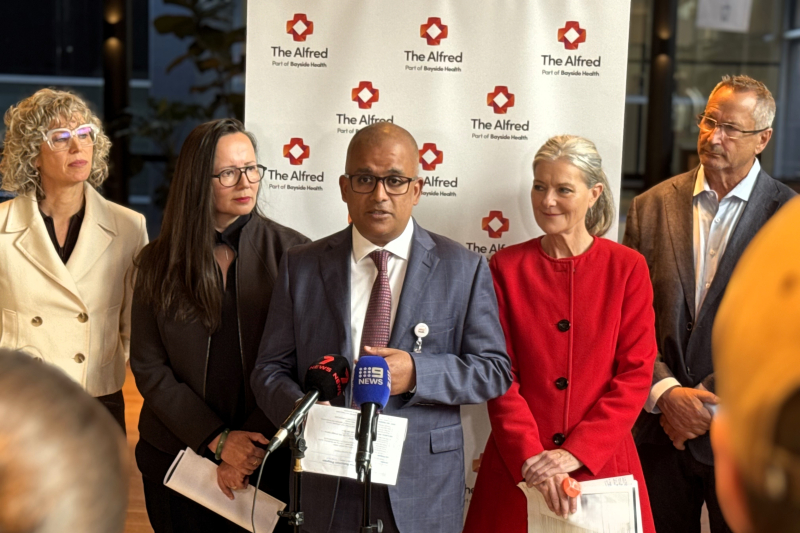
At-risk young people admitted to hospital with violent assault injuries will be offered pathways out of a cycle of violence thanks to a new early intervention pilot launched at The Alfred.
Led by the Victorian Government’s Violence Reduction Unit (VRU) in partnership with The Alfred and the National Trauma Research Institute (NTRI), the $2.5 million Hospital-Based Early Intervention pilot will provide tailored, timely supports for young people recovering in hospital from injuries sustained during violent assault and provide pathways to education and training.
The Alfred’s Deputy Director of Trauma Services A/Prof Joseph Mathew played a key role in developing the program, drawing on his own experiences as a trauma consultant treating at-risk youth.
He said trauma clinicians are uniquely positioned to identify and connect with youth offenders at critical moments where change is possible.
“We see people in moments of crisis, when life hangs in the balance,” A/Prof Mathew said.
“Naturally, it prompts moments of intense reflection for patients.
“The program we are piloting recognises this and allows our clinicians to harness these 'teachable, reachable’ moments to offer a way out while motivation is high.”
Trauma clinicians at The Alfred will identify and link at-risk patients with social workers, youth and lived experience workers and practitioners who will immediately provide specialist support. Patients would then be connected to ongoing community services to help them safely transition back into the community.
Social services providers YSAS and 16 Yards, who have extensive expertise in supporting vulnerable young people, will assist in mentoring and providing opportunities for change.
The Alfred’s Director of Trauma Services Prof Mark Fitzgerald said the program builds upon on proven, working models in the US and UK.
“At the heart of this approach is the understanding that youth violence is as much a public health issue as it is a criminal one,” Prof Fitzgerald said.
“It also acknowledges that health encompasses not just emergency and trauma medicine, but also social work, youth work and peer mentorship.”
Prof Fitzgerald said that data will be collected to monitor and further develop the pilot, with Monash University providing support for its evaluation.
“We’ve seen the long-term success that early intervention programs have had in reducing violence overseas,” Prof Fitzgerald said.
“We’re therefore very pleased to bring this work here, which has the potential to change lives and make our communities safer.”
While initially operating out of The Alfred and the Royal Children’s Hospital, if successful it is hoped the pilot will lead to the creation of a replicable model that could be rolled out to additional hospitals.