‘No one left behind’ this World AIDS Day
World AIDS Day (Monday 1 December) is an opportunity to raise awareness about HIV and AIDS, and to celebrate advancements in the treatment and management of HIV.
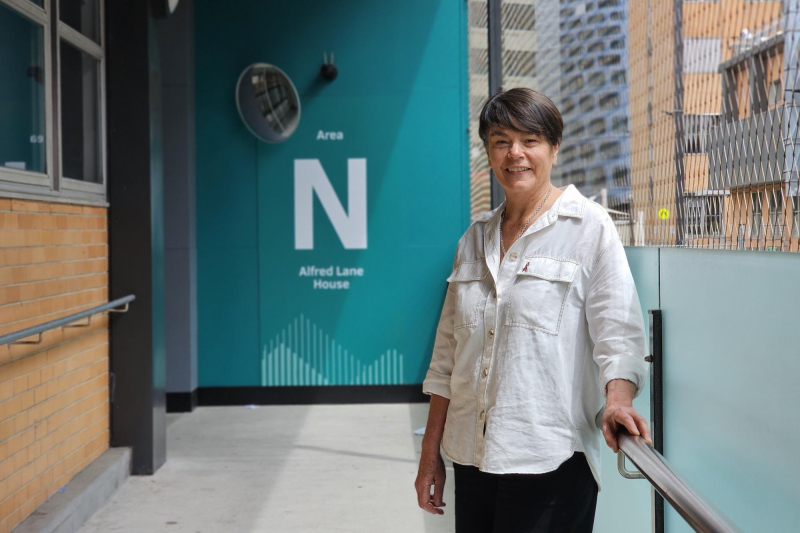
HIV Prevention Nurse Practitioner Jude Armishaw is part of the Victoria Non-Occupational Post Exposure Prophylaxis (NPEP) Service, which assists people who have been exposed to HIV and aims to reduce the risk of contracting HIV.
“World AIDS Day is a moment for us all to come together as a community, reflect on the past, look to the future, and mark the present. We are all in this together, and overall we're doing a good job of HIV prevention and management in Australia,” Jude said.
“However new HIV diagnoses are increasing and we need to continue to work on our response so that no one is left behind.”
It’s estimated almost 31,000 people in Australia were living with HIV in 2024.
Australia reached the UNAIDS target of 90-90-90 in 2020. We are one of the few countries to do so.
This means that in 2023:
- 94 percent of people living with HIV had received a diagnosis;
- of those diagnosed, 95 percent were receiving antiretroviral treatment, and,
- of those receiving this treatment, 98 percent had a suppressed viral load.
Building on this, Australia is close meeting the UNAIDS 2025 target of 95-95-95, with the aim of ending HIV transmission and improving health outcomes for people living with the HIV by 2030.
“With effective antiretroviral treatment HIV is now a chronic manageable infection and no longer associated with mortality from AIDS,” Jude said.
“Looking back 20 years ago when the Victorian NPEP service first started, the type of drugs that we had available did have significant side effects, and it was very hard for people to complete a course of PEP.
“Similarly, for people living with HIV and needing to take those drugs on an ongoing basis, they had a really hard time taking the medication because it did cause significant side effects.
“Now, we have a range of successful treatments, we've got one-pill regimens that if people start early, the life expectancy of someone diagnosed with HIV today is the same as someone in the same demographic who doesn't have HIV.”
This year’s World AIDS Day theme is ‘no one left behind’, highlighting the need to combat inequities in HIV prevention, testing, treatment, and quality of life.
At Alfred Health, it was the late Nick Medland, a Melbourne Sexual Health Centre physician, who observed - and published - that people diagnosed with HIV in Australian were more often overseas born men who have sex with men without Medicare.
“And that discrepancy is due to a number of factors, including not having access to PBS subsidised PrEP (Pre-exposure Prophylaxis),” Jude said.
In 2020 and in response to the high rates of diagnoses in this cohort, the PrEPMe Clinic was launched specifically for people without Medicare.
“We see about 300 people at the moment and there are hopes to expand that at some stage, it’s been a real success,” Jude said.
While medically HIV is now a manageable chronic condition, Jude said peoples’ perceptions of HIV still had a ways to go.
“Although HIV is medically managed very well, it's the stigma that is the main issue,” Jude said.
“We can certainly reassure a person that medically, they will be fine. But it's things like, ‘how am I going to tell my partner, my mother, my brother, my friends? Do I have to tell my workplace?’
“That stigma can be absolutely crippling for people.”
The Peer Navigator project, run through Living Positive Victoria, places HIV-positive peer workers in high-caseload Melbourne clinics, including the Infectious Diseases Clinic at The Alfred, to support people with a new HIV diagnosis.
“They're a wonderful group of people who make themselves available to confidentially chat with people either on the phone or to meet for a coffee somewhere,” Jude said.
“They’re such a valuable resource to help people navigate a new diagnosis.”
Jude said World AIDS Day it is an opportunity for reflection, and to map out the future.
“World AIDS Day is associated with a lot of grief, remembering those who've passed due to HIV,” Jude said.
“In Australia, we have gone from many, many young and predominantly gay men being diagnosed, dying and the collective grief of a community, to a one-pill-a-day with minimal side effects and minimal drug-drug interaction, all in 40 years since the virus was first able to be identified in the laboratory. It's been a really, really fast trajectory.
“But the theme of this year, no one left behind, also reminds us that we can't sit on our laurels and say we've reached the 95, 95, 95 targets.
“Every individual is important, and so it’s those five percents that we really need to focus on, and improve their access to prevention, testing and treatment.”
You can read more about the Victorian PrEP Service and the Victorian NPEP Service.