Transforming the future of UTI care
Half of all women will experience a urinary tract infection (UTI) at some point in their lives, yet countless patients are still told their symptoms don’t exist. A reliance on a diagnostic test from the 1950s remains the global standard — one that routinely fails to detect chronic infection.
For some patients, this leads to years or even decades of pain, repeated antibiotics and hospital admissions.
But hope is already taking shape, fuelled by two timely philanthropic gifts to The Alfred that have sparked new momentum and discovery.
UTIs affect more than 405 million people worldwide every year and the true tally could be double that, given how often cases are misdiagnosed or missed entirely.
Yet despite this staggering number, research into the condition has been largely stagnant for decades.
Patients with recurrent or chronic infections often fall through the cracks, with no clear diagnosis, no treatment pathway and no answers.
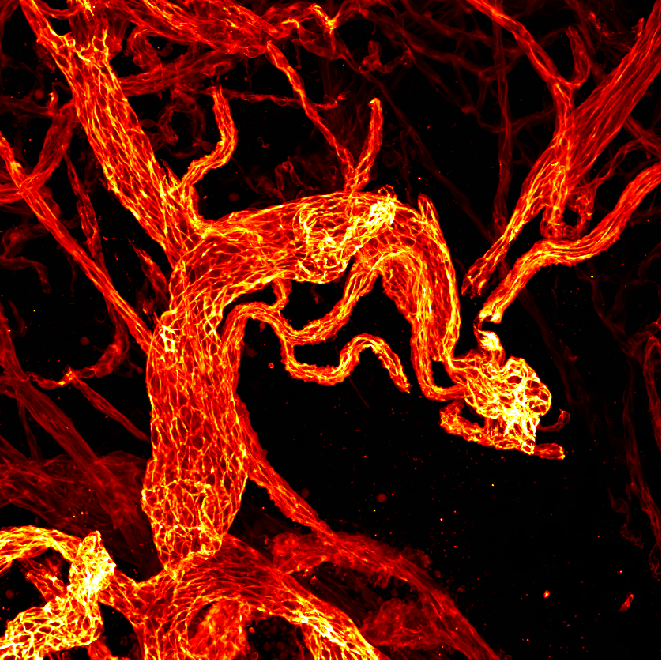
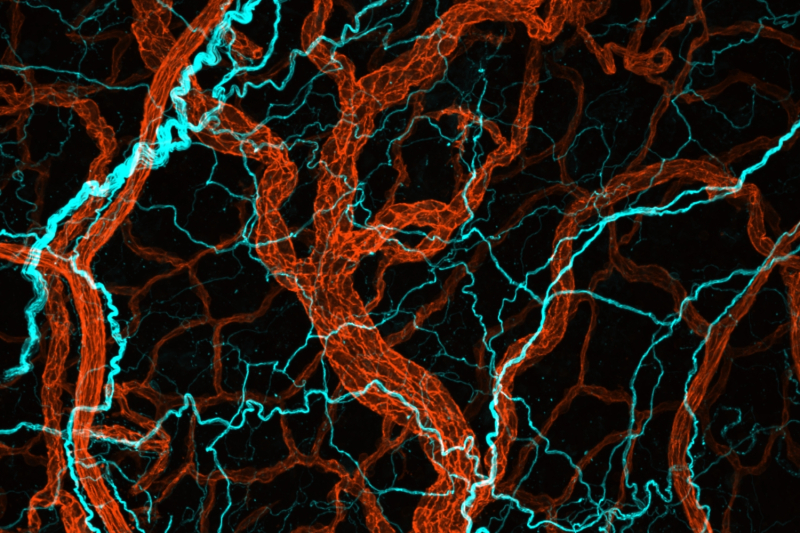
The top image shows blood vessels (orange) and nerves (cyan) intertwining like threads in a living tapestry carrying oxygen, nutrients and signals that sustain urinary functions.
Photos: Ashleigh Paschek, Urinary Tract Disease Research Group
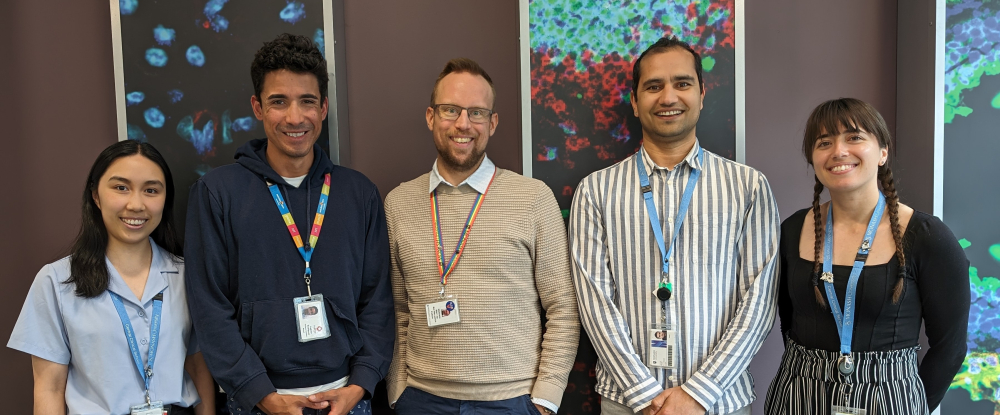
Dr Malcolm Starkey, Head of the Urinary Tract Disease Research Group, is determined to change that.
“Our goal is to transform how UTIs are diagnosed and treated,” he said. “We’re developing new diagnostics and exploring immunotherapy — using the body’s own immune system to fight infection. But none of this would be possible without philanthropy.
“Philanthropy is the launchpad for innovation. Not only for an initial donation, like this, but it also allows us to generate the early data needed to secure major grants and industry partnerships. A single donation can have a multiplying effect.”
These early gifts have enabled new discoveries, new research directions and the recruitment of talented young female scientists whose careers are now taking flight.
Despite the prevalence of UTIs, the condition remains under-recognised and underfunded. UTIs are often dismissed as minor infections, yet the reality is far more serious.
More than one-third of patients fail to respond to current antibiotic treatments, leading to recurrent infections, kidney complications and life-threatening bloodstream infections. In children, repeated infections can cause lifelong kidney damage and even kidney failure.
“UTIs are almost a taboo topic,” Dr Starkey said. “I’d love to see them spoken about the way we now talk about endometriosis or breast cancer.
“Everybody knows someone affected by UTIs.
“We want to increase awareness and advocacy around this so that there is consistency in the diagnostic labs. It would be great to get to a point where people aren’t suffering in silence, or getting lost in the system.
“We need to bring this condition out of the shadows.”
For donors like Janet Tiller of the Wanless Family Foundation, the impact is deeply meaningful.
“UTIs are debilitating for so many people,” she said. “I don't experience it myself, but I know a number of people who do, and it really affects their health and wellbeing.
“Supporting this research means improving quality of life.”
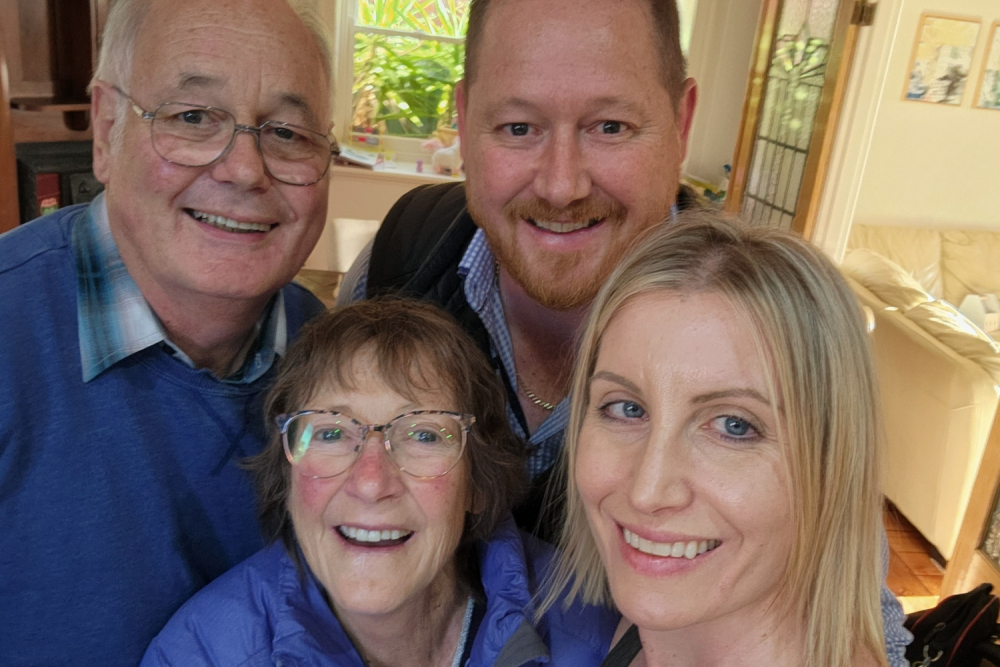
The Urinary Disease Research Group is uniquely positioned to lead a global shift in how UTIs are understood, diagnosed and treated — an impact made possible through the strong collaboration between The Alfred and Monash University.
“There’s so much to do in this space,” Dr Starkey said. “There are more questions than answers — and that’s exactly why philanthropic support is so vital.”
Philanthropic support enables bold ideas, rapid progress and discoveries that traditional funding cannot reach. It fuels the early-stage innovation that leads to breakthroughs and provides hope for patients who have been overlooked for decades, finally receiving the care they deserve.
With your support, The Alfred can lead a global shift in how UTIs are understood, diagnosed and treated — potentially improving countless lives.
You can read this story, and others, in the Autumn 2026 imPossible newsletter here.