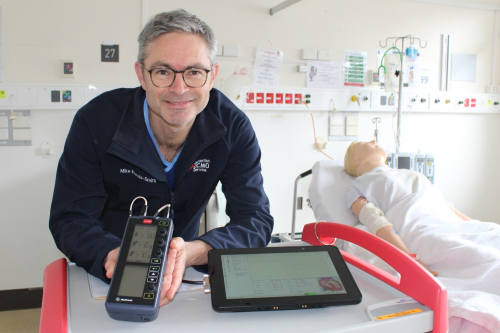
Simulator to help hundreds of staff
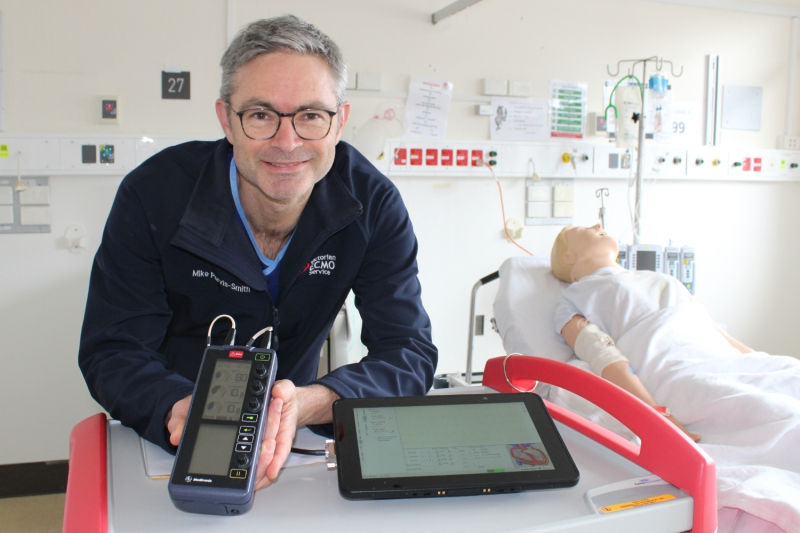
The Alfred has the largest Intensive Care Unit (ICU) in the country, admitting about 3000 patients annually, providing specialised care for a wide range of critical conditions. This includes supporting hundreds of patients who have undergone cardiac surgery.
Thanks to your generous support of our Lifesaving Equipment Fund (LSEF), hundreds of staff in The Alfred’s ICU will learn more about an essential life support following the purchase of a new training tool.
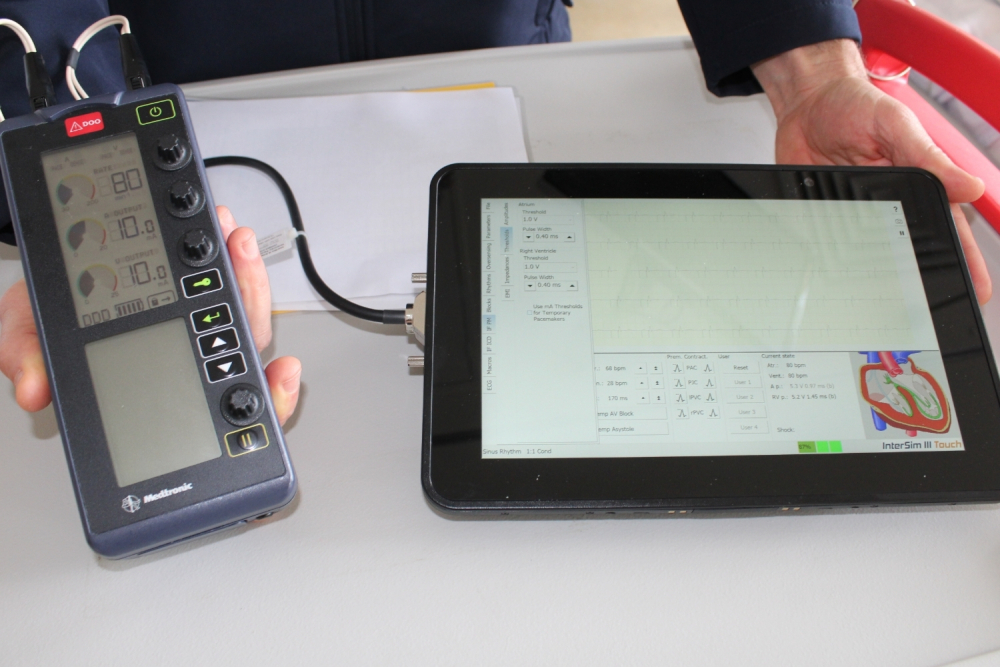
The new device, an Intersim III Touch pacing simulator, will be used to help staff develop mastery of temporary cardiac pacing, an essential type of life support required after cardiac surgery.
Dr Mike Purvis-Smith, an Intensive Care Specialist in The Alfred ICU, said he was “thrilled” to now have what he regarded as the best teaching tool for this core skill, thanks to the support of donors.
“We have been hoping to get a device like this for some time,” he said. “I’d like to say a huge thank you to all of the amazing donors, whose generosity made this possible.
“Our educators have been doing a fantastic job teaching these skills to our staff, but this device will enhance their ability to teach difficult concepts and expose learners to a range of troubleshooting scenarios, in a realistic way, that is otherwise difficult to achieve without having a patient in front of you.
“We will also use it in our Cardiac Advanced Resuscitation Course, where we teach our ICU staff how to respond if our patients deteriorate or experience cardiac arrest after surgery.
“This device will help us simulate scenarios that we have, until now, been unable to effectively replicate. It is a very powerful learning tool, and there is no better way to support our doctors and nurses achieving excellence in this area of intensive care practice.
“It will improve the learning process of a huge number of staff – we have the biggest ICU in the country – so the potential for both staff and their patients to benefit is huge.”
Dr Purvis-Smith said temporary pacing after cardiac surgery is crucial to patients.
“Our hearts have specialised cells that trigger every heartbeat and tissue that conducts these signals around the heart to produce a normal cardiac rhythm,” he said.
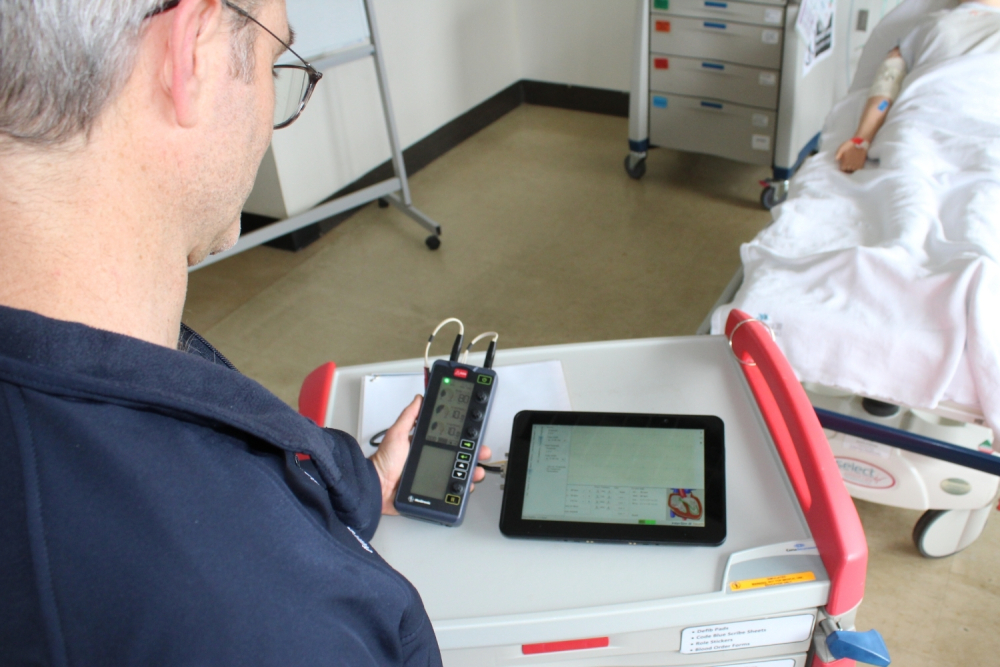
“Following cardiac surgery, these essential functions of the heart may not work normally, such that most patients require a ‘temporary pacing’ system in place to replicate a normal heart rhythm, if needed.
“This involves placing temporary wires on the heart’s surface during surgery, which are connected to a ‘pacing box’ capable of providing an electrical signal to simulate a heartbeat if the patient’s heartrate is inadequate.”
Intensive care nurses and doctors are responsible for this pacing system until the patient no longer needs them. In some circumstances, if the pacing doesn’t work, the heart won’t beat.
“So, staff need to understand the system very well, including problems that can arise and how to fix them quickly,” Dr Purvis-Smith said. “The pacing simulator can be used to practice anything from basic set-up and maintenance, to emergency troubleshooting.
“It can be adjusted to replicate pretty much any pacing issues when caring for a cardiac patient. Staff can practice responding to these in the safety of a simulated learning environment, helping them be ready for anything when looking after their patients.”
The LSEF was established in 2019 to allow us to purchase state-of-the-art equipment as quickly as possible. Since launching, more than $5.5 million has been raised and it has helped our world-class teams access the latest innovations and advanced technology to provide even greater care for our patients.
This story originally appeared in our 2026 publication of Impact, which can be downloaded here.